Project Description
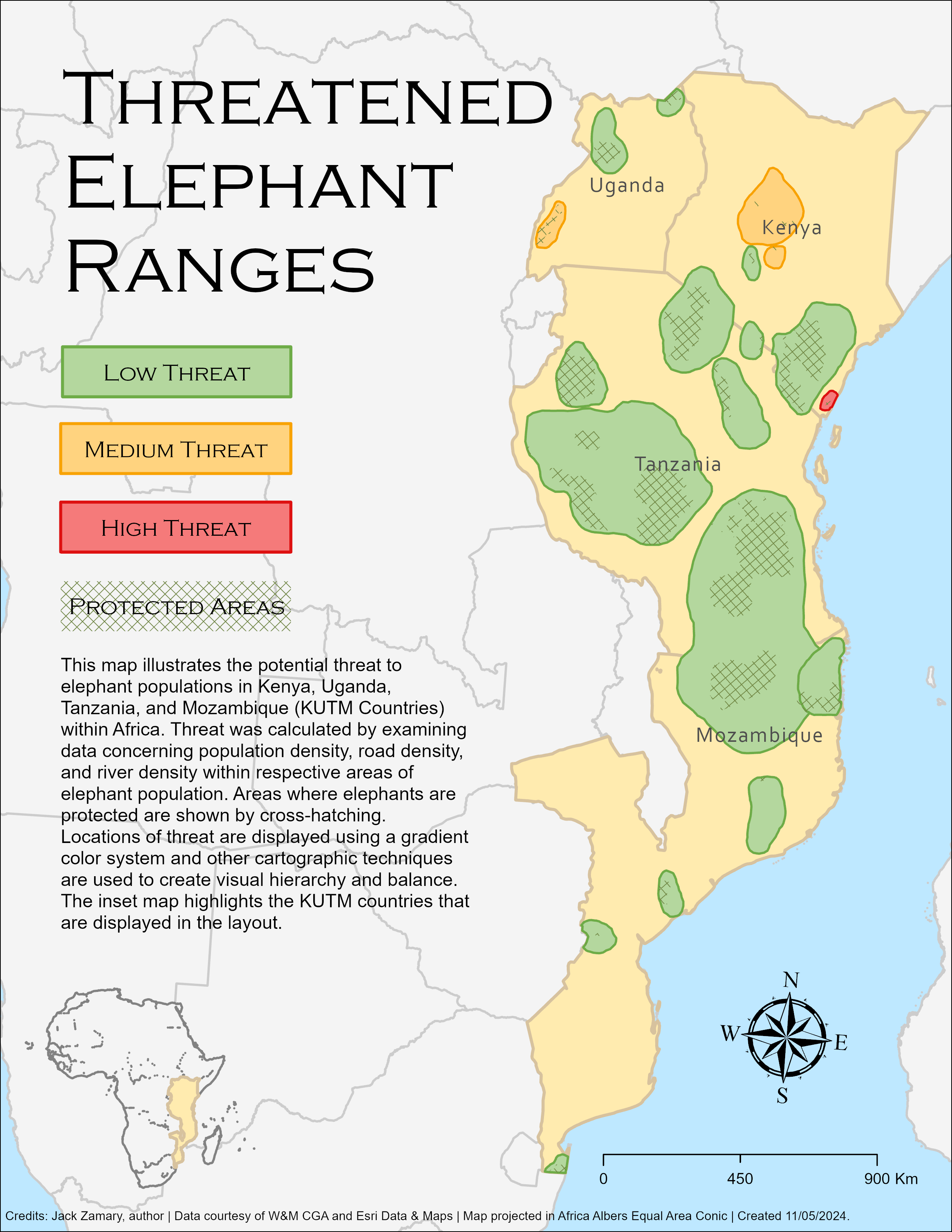
The threats to elephant populations in Kenya, Uganda, Tanzania, and Mozambique (referred to as KUTM Countries) were assessed to determine the legal protections available for these populations and to estimate both the proportion of elephants that are well protected and which specific populations are most threatened. The following map was created as an in class project to help determine how Governments should work to protect and expand upon areas of elephant protection.
Analysis Conclusions
Governments should work to protect and expand upon areas of elephant protection. Even in locations where threat is lower and minimized not much of the area is protected. This can pose danger to elephant population as migrate to new locations. Expanding on protect areas can be done by working with the Wildlife Service in each country to observe locations of high elephant threat and make those areas protected.
Governments should also aim to continue to promote sustainable tourism, especially in areas of high population concentration as that is a factor that impacts elephant threat. Moreover, roads are also a factor that has an impact. Building new roads in certain locations for tourism and safari purposes could threated elephant population. Keeping these factors in mind when considering tourism could help protect more elephants and maintain population stability.
Data Dictionary
View Data Dictionary PDF
Instructor Comments
"Fantastic map. This is the best one I've had yet. Well done."
— Professor Brian Pierce